#SaveCrest: The Alumni Perspective Part II
MERCER ISLAND SCHOOLSOPINION


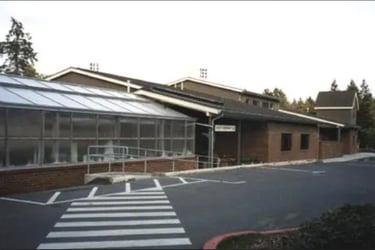
In February of 2019 I walked into the Crest building after a decade away. I was there to meet with humanities teacher and former classmate of mine Patrick Rigby, to discuss whether the program was right for two writing students of mine. Though he had traded in his leather jacket for plaid flannels, Rigby was the same as he’d ever been: warm, blunt, funny, an unvarnished truth-teller, whether you’re in the mood for that or not; this is a universal norm for Crest educators
Of the students I was there to discuss, one was a solid C-student, who would do much better with a little one-on-one attention. The other was the kind of brilliant, fragile, out-of-left-field thinker who was getting buried alive at the main campus but would blossom at Crest.
Though the program remained largely the same as when Rigby and I were students, Crest no longer had the capacity to take kids who were surviving but not thriving (that was me, by the way). Rigby explained that they now had a waitlist, and only had room to take the students who were struggling to survive, period.
Fast forward to April 1st, 2026: MIHS principal Nick Wold announces that the anchor of Crest’s ecosystem, the Crest Humanities Block, would not return for the 2026-27 school year. He had, in so many words, announced Crest’s closure.
How did we go from a program with a waitlist to a program that is getting cut due to, according to district administration, budget cuts and lower enrollment?
How Did We Get Here?
At the root of the issue is money. Washington State ranks 40th in the nation in investment in K-12 education as a percentage of the state’s total economy. And while funding has risen over the years, the share of Washington State’s budget spent on education has dropped from 51.6% to 43.23% over the last five years. Lack of state dollars is one problem. Pig-piling on top of that are rising costs from inflation, the implosion of the federal Department of Education, and the loss of a recent local school levy. It’s little wonder that Mercer Island School District is facing a yawning budget gap. I do not envy any decision-maker their choices here, but I question whether closing Crest is the best solution, or even the least worst.
The district cited flagging enrollment numbers as a reason for closing Crest Block. Behind that easy metric, however, is a more complicated story. Up until 2024, Crest’s student-to-teacher ratio fluctuated between 15-1 and 18-1. Beginning in the 2024-25 school year, however, administrators changed the paradigm, bringing Crest’s required ratio up to 33 students per teacher, as it is in the main building. While Crest’s enrollment did not change dramatically, its expectations did, instead of two teachers team-teaching Crest’s Block class, this year Rigby has been teaching solo. Right now, 41 students have requested taking Crest Block next year, which in the new 33-1 paradigm, is not enough to warrant two sections, but is more than enough to fill one.
Most kids find their way to Crest through referral. “I’ve noticed a big shift,” Rigby told me in a phone call over Spring Break, “Prior to 2020, most of our referrals came through [Student Support Teams], the counseling office. After 2020, most referrals came from Special Ed case managers.” The Covid years played havoc with schools, and both the administrative and counseling offices saw high turnover. It is possible that such staff turnover has led to a lack of familiarity with Crest; if this is the case, and fewer referrals are coming from counseling offices, it could go a long way towards explaining why, according to the district, 75% of students in the Crest Block are receiving special services (which is another reason the district cites for closing the program).
What Happens if Crest Closes?
In a letter sent to Crest students and families, the district affirmed its commitment to “supporting everyone through this transition,” but if Crest can no longer utilize its own building, education on Mercer Island will not look the same for the most vulnerable students.
“Crest’s ecosystem is not replicable in a 1400-person institutional building,” says Rigby. And Crest is an ecosystem, a network of interlocking spaces and relationships. For some kids, that ecosystem might revolve around one relationship with a teacher, but others need the support and sanctuary of the entire building and community. “Crest gave me a safe space to be myself,” wrote Sam Speer, Crest Class of 2005, now a school administrator. “Crest is a crucial safety net for children who cannot succeed in a formal school system.”
Crest has a longstanding goal of being a safe landing-place for kids in crisis. For many of the alumni who have shared their stories through the Crest Alumni Network, Crest became their permanent home. For others, it’s a pit stop during a turbulent time, a place students can go to weather a particular crisis, a temporary space to heal and recover. Meredith Wetherell, Crest Class of 1993 and now a special education teacher, has seen the necessity of alternative environments for at risk youth in both Washington and Idaho, and wrote that Mercer Island is no exception. “Many students, especially those with special learning needs, require small group instruction and project based learning in order to succeed. Many students who could successfully graduate from Crest will get lost in the system, if there is not a place for them to get the support they need. Rather than graduating and moving on to greater things, students will drop out and turn to unhealthy ways of surviving. This is literally about life and death for some kids at Crest.” This sentiment is echoed by Charla Soriano Jaffee, a Crest alum from 1975 who graduated from University of Washington and earned a Masters in Social Work from Smith College. “[Alternative high schools] create a safe and supportive setting where students facing academic, social, emotional, and life challenges can continue their education, build confidence, and develop practical skills for the future. By offering personalized instruction, counseling support, and pathways to graduation, alternative high schools can help reduce dropout rates, promote equity in education, and give students a second chance to succeed and become productive members of their communities.”
So what might happen if Mercer Island’s alternative high school closes? Students might drop out. Families might elect to send their kids to private school. If a child’s need is great enough, some students might even be outplaced at a private institution at the district’s expense. A tiny percentage of students with highly specialized needs typically qualify for this kind of out-placement. Crest has historically provided the intermediary support needed to prevent this kind of extreme outcome for its target population. “We have some students who are so high need, who we do a million different things for,” Rigby says, fearing that the closure of Crest might add to the outplacement roster. It would be a tragic irony if Crest’s closure due to money ended up costing the district additional funds, but only time will tell.
What Comes Next and How to Get Involved
A workable solution might yet exist for Crest. If so, it is imperative that both district administrators and school board members hear voices from the community. If you haven’t already, please sign the #SaveCrest petition. Please consider writing a letter to the Mercer Island School Board. If you’re up for it, please show up wearing all black at this week’s School Board Meeting on Thursday, April 23rd at 5pm. And if you are interested in reading more alumni stories, visit the Crest Alumni Network. If you are an alumni, please get in touch with us and share your story.
The question of what we do with Crest comes down to the role we want public education to play in society. I want public schools to be palaces. In a perfect world, we would both create systems of support that keep the most at-risk kids with us and growing, while also allowing every child the opportunity to go as far as they want in whatever discipline ignites their passion. Maybe when funding is more forthcoming, we can work towards this reality. Right now, however, before we can help our students thrive, we need to make sure every child survives.
About the Author:
Roz Ray is a local writer and Crest Alum, Class of 2001. Her short stories have appeared in Tahoma Literary Review, Easy Street Magazine, and Black Heart Magazine, among others, and she won the Black List's Unpublished Novel Award for Crime & Mystery in 2025. She holds an MFA in Creative Writing, and teaches writing to students third grade through graduate school. When she's not writing or teaching, she's on a paddleboard, in a boxing gym, or helping her dad remodel somebody's kitchen. You can find more of her writing through her website, www.rozray.net, and she's on Instagram and Bluesky as @writerinworkboots