To Feed Or Not To Feed?
COMMUNITY
To feed or not to feed? This is the question: Whether ‘tis nobler in the garden to let the birds suffer the slings and arrows of human intervention? Or stock feeders against a sea of troubles...
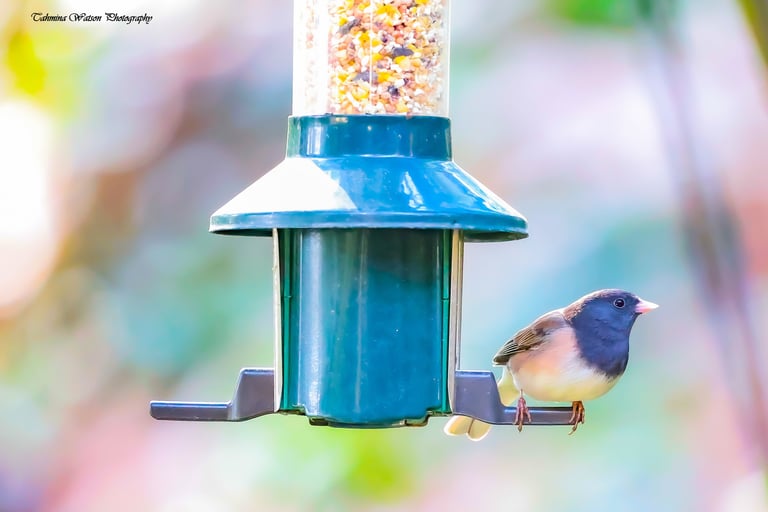
Photo: Tahmina Watson
About three years ago, a visitor to my house noticed the hub of activity at my birdfeeders and warned “That’s a superspreader event.” As a falconer, she spoke with a to-be-taken-seriously level knowledge of avians. At the time, the rising spread of Highly Pathogenic Avian Influenza (HPAI), commonly known as bird flu, added further concerns to the debate over whether backyard feeders do more harm than good. Devastated that my only slightly self-serving help was more likely harm, I dutifully put my feeders away. My garden still had many visitors, but nothing like the typical chatty throng flitting about the plants, waiting for a turn at the feeder, admonishing others who lingered too long. Fast forward three drama filled years. With so much else going on in the world, bird flu sank to a lower position on my things-that-interfere-with-sleep list. While this week brought a respite from the rain, my frosty garden became nearly devoid of birds. This of course immediately elevated bird food scarcity concerns on the priorities list and I wondered if there was an update on feeder use that I may have missed. I wrote to Josh Morris, the Conservation Director of Birds Connect Seattle (Formerly the Seattle Audubon Society) to learn more. He pointed me to research findings on songbirds—the primary visitors to backyard feeders— concluding that they are generally considered low-risk carriers of HPAI compared to waterfowl like geese or ducks. While the risk of transmission increases whenever birds are encouraged to congregate in high densities, Josh says “If done responsibly, it’s a great way to bring the beauty and joy of birds close to your home. For a lot of people, watching birds at their feeder is the primary way the engage with birds and nature, and it keeps birds accessible for those with mobility limitations.” However, if you also happen to be a backyard chicken keeper, the stakes are higher; best practices for 2026 dictate that wild bird feeders should be removed entirely if chickens or ducks are on the property, as cross-species transmission remains a significant threat to domestic flocks.
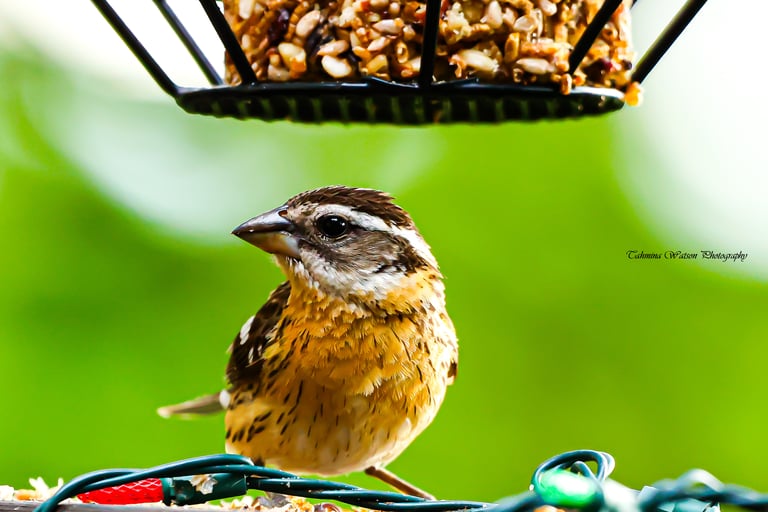
Photo: Tahmina Watson
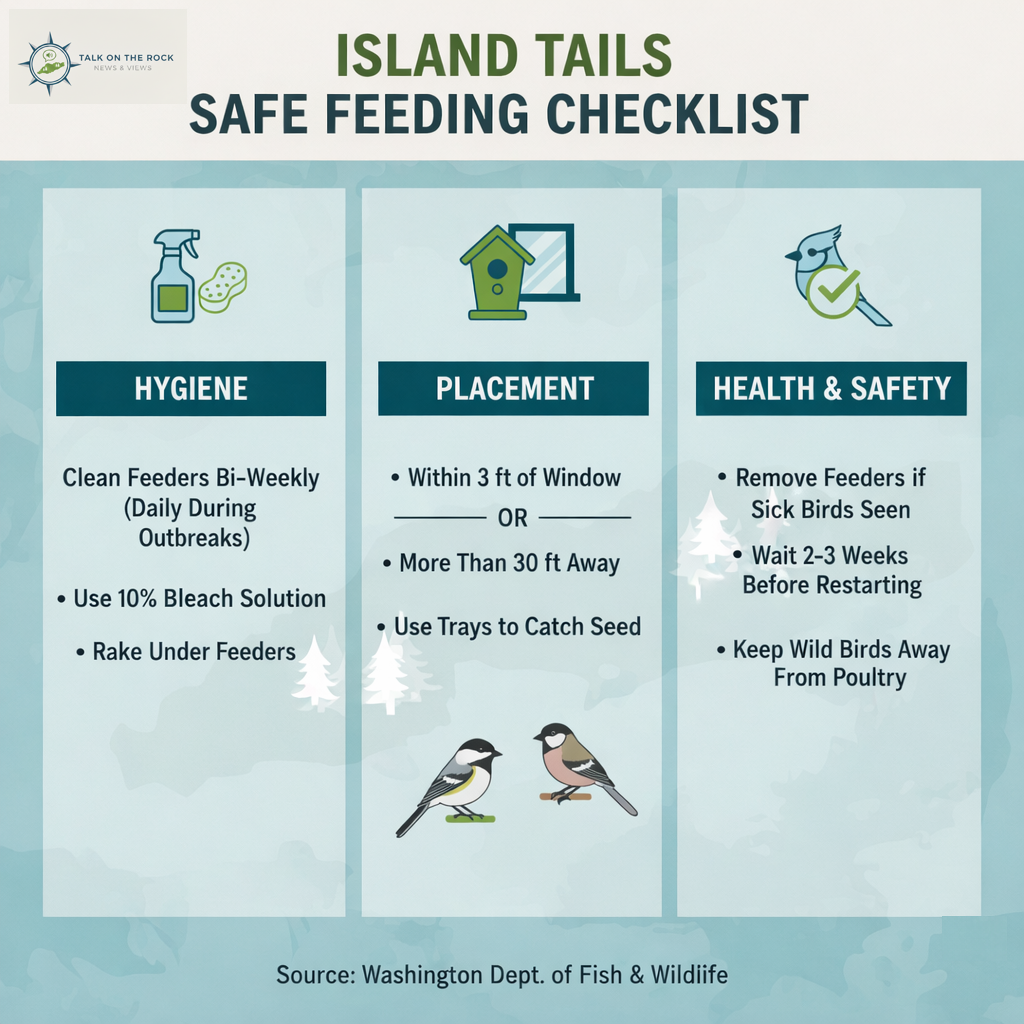
For a hot minute, I happily pictured my garden alive again with birds, the air filled with noisy chatter and happy calls. But Josh wasn’t finished. “Disease transmission is a concern for sure. Most feeder birds aren’t at the highest risk of bird flu, but there are other pathogens that can spread at feeders.” Beyond the specific threat of bird flu, supplemental feeding can inadvertently spread other common Pacific Northwest avian diseases such as salmonellosis and avian conjunctivitis. Research indicates that while birds typically only rely on feeders for about 20% of their total nutrition, the "micro-environment" beneath the feeder is just as critical as the feeder itself. Spilled seed and hulls can rot or become contaminated with feces, creating a breeding ground for bacteria and attracting unwanted rodents or larger wildlife like raccoons. Josh points out that this “…increases use of toxic rat poisons, which enters the food chain when hawks eat poisoned rats.” Experts suggest using "no-mess" seed blends or installing trays to catch debris and raking the ground regularly to prevent the buildup of pathogens. Additionally, placement is a key safety factor. To prevent fatal window strikes, feeders should be placed either within 3 feet of a window or more than 30 feet away, as the middle distance often leads to high-speed collisions when birds are startled.
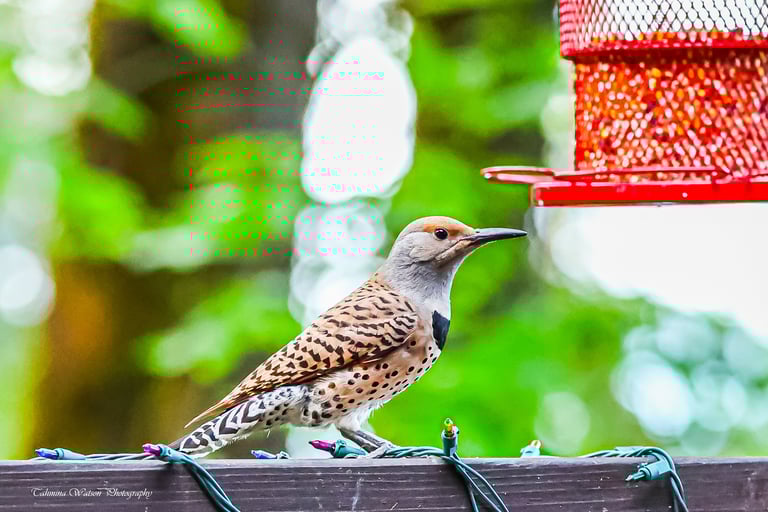
Photo: Tahmina Watson
Josh brought up one more issue to ponder: “The farmers who grow bird seed use a large amount of pesticides that poison the earth and reduce the prey base for insect-eating species—which is a lot of species. Ironically, seed growers also have to use bird deterrents and “avicides”—bird poisons—to keep birds from eating the bird seed that they’ll be selling to feed birds!” [Me: 🤯]
With my immediate concerns about bird flu assuaged, I prepared to reintroduce the feeders. I purchased “no waste” bird seed as recommended by Josh and added feeder cleaning to my regular chore list. I made sure the feeders are within three feet of the window (or further than thirty feet). I cautiously rehung my feeders. The birds returned astonishingly quickly and the garden soon became a hotbed of activity. With careful monitoring and vigilant cleaning, I hope to provide a small but meaningful benefit to our avian friends, while also bringing daily joy and a deeper sense of connection to nature for me.
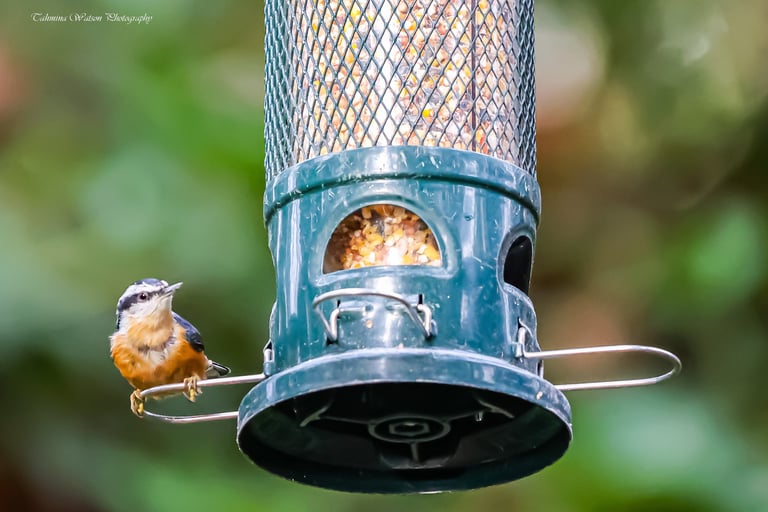
Photo: Tahmina Watson
To feed, or not to feed, that is the question:
Whether 'tis safer for the flock to scatter
And forage wild amidst the island’s greenery,
Or to raise feeders 'gainst a sea of hunger
And by cleaning, end it.
To scrub, to bleach— No more; and by a bleach to say we end
The salmonella and the thousand natural shocks
That birds are heir to. 'Tis a consummation
Devoutly to be wish’d. To feed, to clean;
To clean, perchance to miss a spot— Ay, there’s the rub.
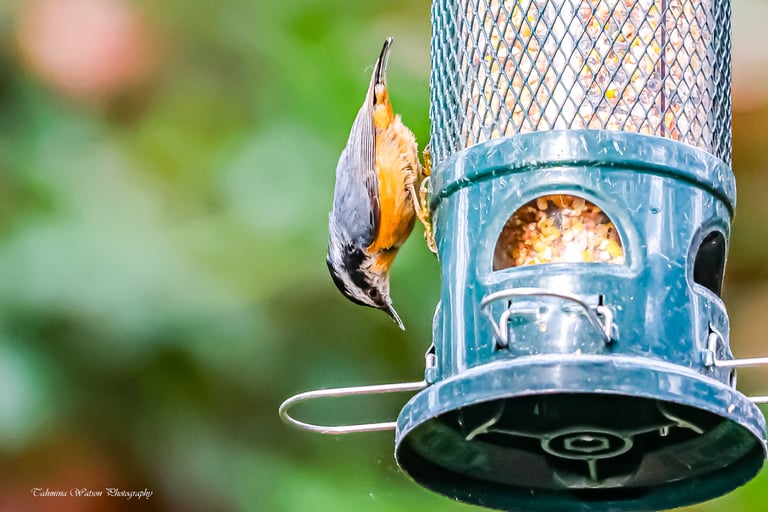
Photo: Tahmina Watson
The beautiful photos in this post were generously shared by Mercer Island's own Tahmina Watson, attorney, author, podcaster, mom, photographer, and bird afficionado extraordinaire! We hope to hear more from Tahmina in the future.
Additional Resources:
Avian Influenza Outbreak: Should You Take Down Your Bird Feeders?
Birds Connect Seattle (Formerly Audubon Society)
Feeding Wild Birds Can Carry Risks: Here’s How to Minimize Unintended Harms
How to Feed Birds Safely and Ethically
Should We Feed Birds? What the Science Says About the Impacts of Bird Feeding