City Council Agenda - 2026-01-20
CITY GOVERNMENT
The council agenda is very light for Tuesday, January 20, which may be a relief for staff and the Council following our all-day session on the prior Friday. Topics include:
AB 6845: Mercer Island Municipal Court
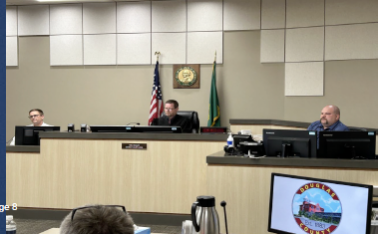
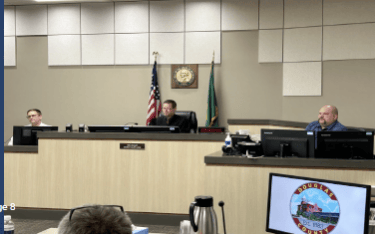
Did you know that Mercer Island has its own Municipal Court? In this portion of the meeting, Judge Gregory will give Council an update on the status and function of the court.
Per state law, the court can only hear certain types of cases
Non-criminal traffic citations
Misdemeanor and gross misdemeanor crimes that occur within the city boundaries
Due to the closure of City Hall as a result of asbestos contamination, Mercer Island does not have a suitable space for a court. Accordingly, the City rents space in Newcastle for holding court.

AB 6839: Budget Basics and Financial Priorities in 2026
AB 6839 is an informational report presented to the Mercer Island City Council to explain how the City’s budget works, what financial pressures are emerging, and how the City will begin planning its next two-year budget for 2027–2028. No decisions will be made at this meeting; the goal is education and early discussion.
City general fund revenues come primarily from property taxes, sales taxes, business and occupation taxes, and utility taxes. Of these, property taxes are the most significant, and, per state law, property tax revenues on existing land and buildings cannot grow by more than 1% per year without voter approval, which creates challenges when inflation exceeds 4%.
The city is managed prudently and carefully. And in recent years the city financial position has been strengthened by a combination of:
Budget savings from the reduction in staffing and services during the COVID pandemic
Federal government stimulus funds
City-manager-initiated operational changes to increase efficiency.
However, continued inflationary pressures are stretching city resources to the limit. The city will have tough decisions ahead that are necessary to match expenditures to revenues, perhaps including reduction or elimination of important city services.
What is the City budget?
Mercer Island adopts a budget every two years, called a biennial budget. The current budget (2025–2026) totals about $222 million and pays for everyday services like police, fire, parks, utilities, and staff, as well as large infrastructure projects such as roads, buildings, and utility systems.
The budget has two main parts:
Operating budget – pays for day-to-day services and staff.
Capital budget – pays for major projects like buildings, roads, parks, and utility upgrades.
How does the City track its money?
The City does not use one big checking account. Instead, it uses multiple funds, most legally restricted by local or state law to specific purposes. For example:
The General Fund pays for most basic city services.
The Street Fund can only be used for transportation.
Utility funds (water, sewer, stormwater) are paid for by user fees and utility bills and can only be used for those services.
Some money is restricted by local or state law, or by voters, and can only be used for specific purposes, while other money (like general property taxes) is more flexible. This system ensures transparency and prevents funds from being used improperly. In addition, using dedicated funds like the Street Fund and Utility Funds would be unwise, even if doing so was not illegal, given material upgrades and repairs that are necessary for our aging infrastructure.
Financial challenges ahead
The city faces growing financial pressure:
The General Fund is projected to spend more than it brings in starting in 2027, with reserves potentially running out by around 2029 if no changes are made. This is primarily driven by revenues that do not keep up with inflationary pressures on cost of operations,
Similarly, the Youth and Family Services Fund, which funds school counselors are other essential city social services, is expected to face ongoing shortfalls beginning in 2027.
Costs for infrastructure, facilities, vehicles, and equipment are rising faster than past projections.
At the same time, the City is managing many large, long-term needs, including park waterfront repairs, water and sewer upgrades, replacement of City facilities, fire equipment replacement, and required updates to the Comprehensive Plan.
What happens next?
In 2026, staff will begin drafting the 2027–2028 budget, working with the City Council to:
Set priorities;
Balance services with available revenue;
Explore long-term funding solutions; and
Engage the community before final adoption in late 2026.
AB 6839 sets the stage for those conversations and emphasizes the need for careful planning to keep City services sustainable over time.
AB 6837: Water Supply Pipeline – Phase 2 Design Contract Approval
Seattle Public Utilities is the sole provider of potable water to Mercer Island—which is one of the key ways in which we are dependent upon Seattle. The SPU 24-inch water transmission line was constructed in 1956. Like much of City infrastructure built in that era, this line is nearing the end of its useful life.
A portion of the line is located in the SE 40th Street public right-of-way and has required several leak repairs over the decades. Most recently, in April 2023 (AB 6281) and April 2024 (AB 6471), the City was notified of major system failures on the SPU water supply line. Although circumstances for each event were different, both events resulted in major water emergencies impacting the Mercer Island community.
In October 2024, the City Council authorized staff to include design and construction of a new replacement water supply line in the 2025-2030 Capital Improvement Plan (AB 6530). Although the primary driver for construction includes the installation of a new water supply line, the project scope also includes other infrastructure improvements to pressure reducing valve stations and related roadways. This is one example of City staff saving money by coordinating the timing of different infrastructure projects.
This agenda bill authorizes staff to finish the design work for this project, taking it from 60% design to final design. Construction costs for the project are currently estimated to be between $12.5 and $13.5 million. The Phase 2 design contract is approximately 6% of that cost.
AB 6849: 2026-2027 City Council Liaison Assignments
In accordance with City Council Rules of Procedure Section 2.3(C)(6), Mayor Rosenbaum, in consultation with Deputy Mayor Becker, assigns Councilmembers to serve as liaisons to advisory boards and commissions and to serve on standing City Council committees, local committees, and certain regional committees. Options will include
The Disability Board
The Arts Council
The Open Space Conservancy Trust Board
The Parks & Recreation Commission
The Utility Board
The MISD PTSA Council
MISD Superintendent's Community Advisory Council (SCA)
MISD Superintendent’s Equity Advisory Council (SEAC)
Mercer Island PTA Advocacy Committee
Healthy Youth Initiative Community Coalition
Chamber of Commerce Board
Eastside Transportation Partnership
King County-Cities Climate Collaboration
Renton Airport Advisory Committee
SCA Public Issues Committee (PIC)
WRIA 8 Salmon Recovery Council
ARCH Council of Elected Officials 2026 Pilot
Typically Councilmembers serve on around three of these bodies.